Colors That Make Latina SkinLuminous
Latina skin is one of the most diverse complexion ranges in beauty — spanning fair Argentinian and Spanish-heritage tones through warm caramel Mexican and Caribbean complexions to rich, deep Afro-Latina and Indigenous skin tones. What often unites Latina complexions across this range is a tendency toward warm, golden, or olive undertones — a warmth that makes specific colors sing and others fall flat. But Latina skin is not monolithic: undertones genuinely range from warm to neutral to olive-cool, and your specific undertone matters as much as your depth. This guide covers the full spectrum.
Discover Your ColorsWhy Latina Skin Tones Deserve Specific Color Guidance
The diversity of Latina complexions — spanning continents and reflecting indigenous, European, African, and Asian heritage in various combinations — means there is no single 'Latina skin tone.' Fair Latina skin with warm undertones needs different colors than deep Afro-Latina skin with neutral undertones. However, the most common Latina undertone pattern is warm-to-olive: a golden or warm olive quality that affects color compatibility in very specific ways.
Warm and olive undertones — the most prevalent across Latina complexions — mean that certain colors reliably flatter while others consistently disappoint. Colors with warmth, depth, and saturation tend to work beautifully with the golden-olive quality of most Latina skin. Cool, ashy, and desaturated colors tend to conflict with it, creating a sallow or dull appearance. Understanding this principle means you can evaluate any color quickly: does it have warmth and richness, or is it cool and grey-tinged?
Olive undertones specifically — common in Latina complexions that reflect Mediterranean, Indigenous, or mixed heritage — have their own nuances. Olive skin can look sallow in pale, cool colors, and overly earthy in very muted, brown-heavy palettes. The sweet spot for olive Latina skin is colors with warmth and saturation: rich jewel tones, warm earth colors with vibrancy, and deep neutrals that have warm quality without being muddy.
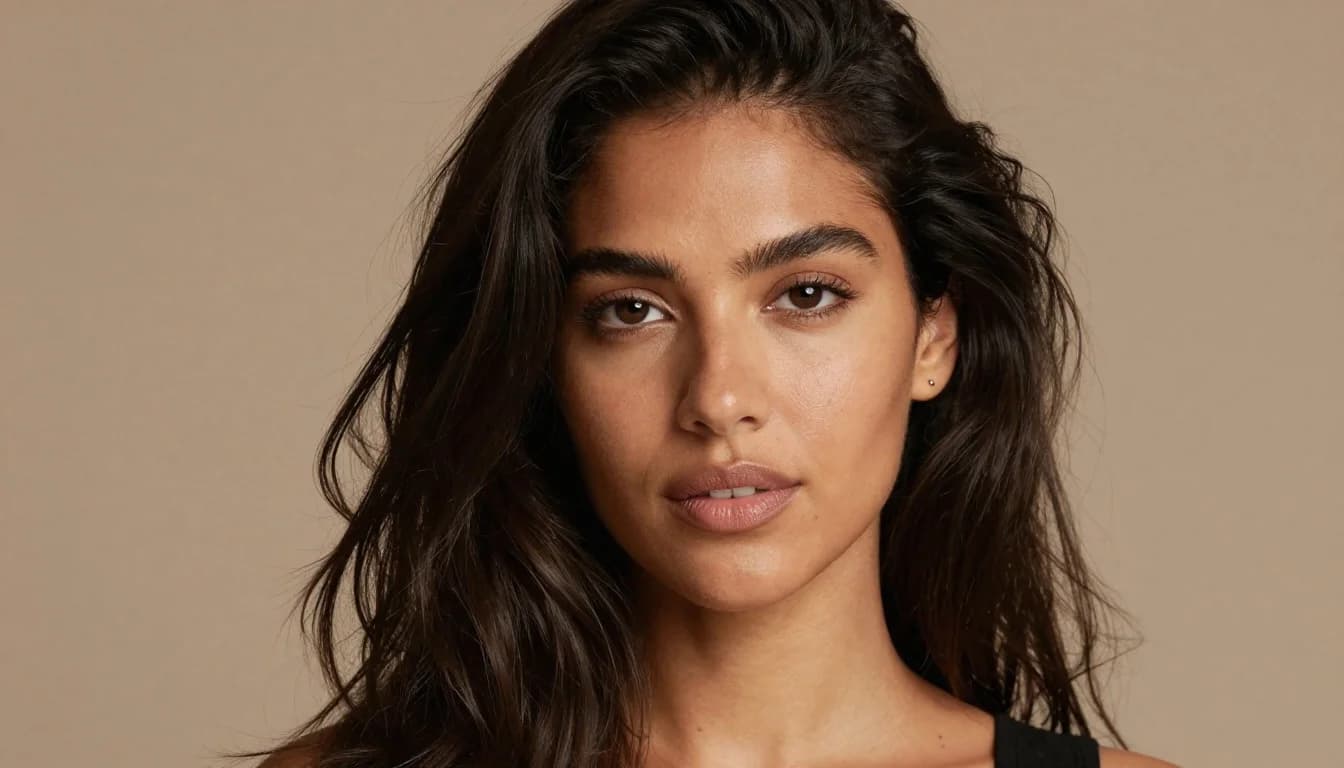
Your Most Flattering Color Families for Luminous
Warm Earthy Brights
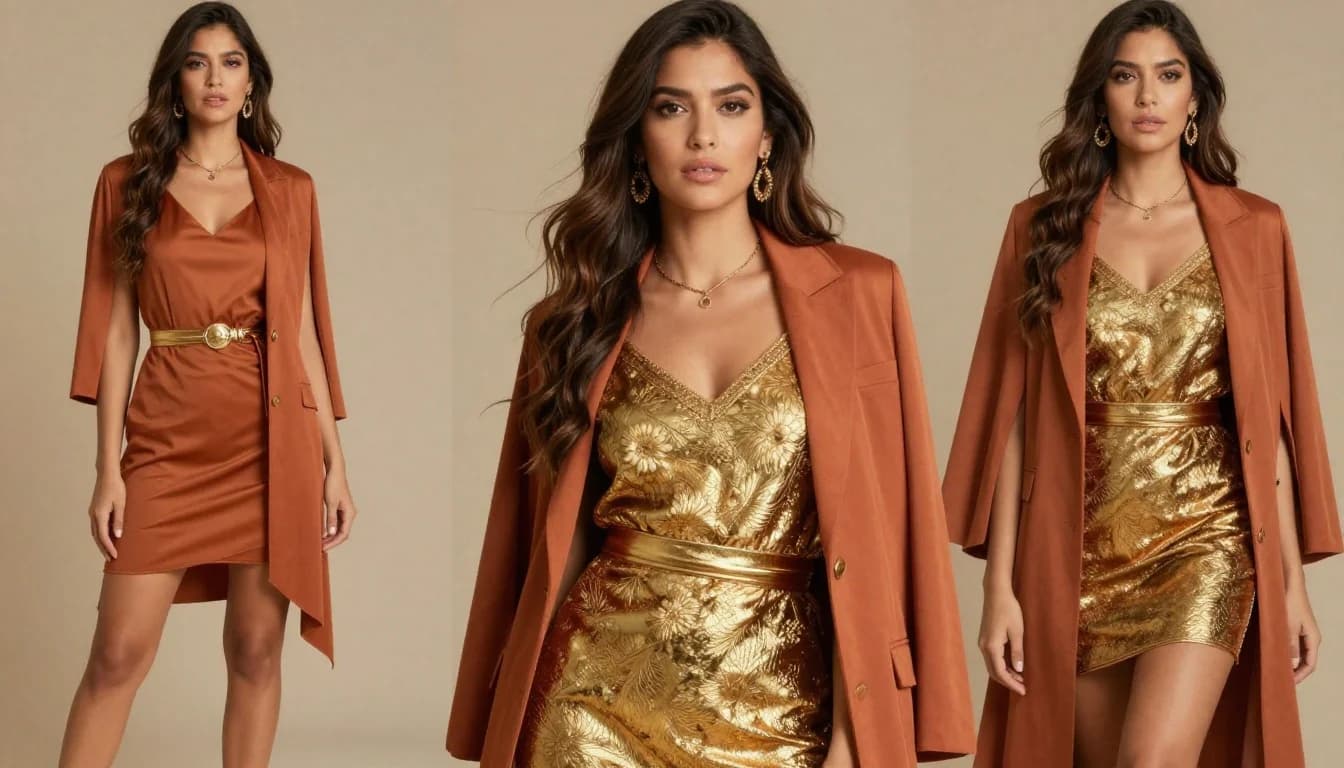
Warm earthy brights are the most reliably flattering family for warm-undertoned Latina complexions. Terracotta is almost universally flattering — its warm red-orange quality resonates with golden undertones, creating a luminous, vibrant effect rather than a sallow one. Rust and brick red add rich warmth. Saffron and warm yellow are striking on medium to deep Latina skin — the golden frequency of these colors harmonizes beautifully with golden undertones. These colors feel intentional and vibrant on warm Latina skin.
Rich Jewel Tones
Rich jewel tones with warm quality are exceptional on Latina skin across the depth range. Deep emerald creates a striking contrast against warm and olive complexions — the green-against-warm-skin combination is particularly beautiful. Warm sapphire (with indigo rather than grey quality) illuminates. Rich violet and plum work across fair to deep Latina skin, providing depth without the harshness of cool brights. The warmer versions of jewel tones consistently outperform their cool counterparts on Latina complexions.
Vibrant Warm Pinks and Magentas
Warm, vivid pinks and magentas are particularly flattering on Latina skin — especially medium to deep warm complexions. Hot coral against warm caramel skin creates a vibrant, luminous harmony. Warm fuchsia and vivid magenta both have enough warmth to work with olive undertones without creating the temperature conflict that cool, icy pinks create. Berry pink with its warm-red quality is more flattering than cool powder pink for most Latina complexions.
Deep Warm Neutrals
The best neutrals for warm Latina skin are warm rather than cool. Warm camel and chocolate brown create harmonious, tonal combinations with warm-undertoned complexions rather than the temperature conflict created by cool grey. Warm ivory is significantly more flattering than stark white on most Latina complexions — it shares the golden warmth rather than contrasting with it. Bronze and warm metallics are particularly striking on Latina skin across the depth range.
Ready to Find Your Best Colors?
Get Your Color AnalysisHow to Dress Latina Skin with Intention
Identifying your undertone within the Latina range
Latina skin spans warm, olive, and even neutral undertones. Before applying any color advice, identify your specific undertone. Warm golden undertones benefit most from the earth-and-jewel guidance above. Olive undertones — that yellow-green quality — often suit richer, deeper versions of warm colors and can be overwhelmed by very pale or ashy tones. If your undertone is more neutral, you have wider flexibility. Looking at your vein color in natural light is the most reliable quick test.
Building an everyday wardrobe
Your most powerful everyday neutrals are warm ones: warm ivory rather than stark white, warm camel rather than cool grey, deep chocolate rather than charcoal. Build your basics in these warm neutrals and then layer in your color pieces: terracotta tops, warm jewel-tone blouses, vivid magentas. This creates a wardrobe that consistently works with your undertone rather than fighting it. A warm camel blazer is often more flattering than a grey one for most Latina complexions.
Embracing bold Latin color traditions
Latin American fashion traditions are rich in vivid, bold color combinations — and for good reason. Warm golden and olive Latina skin can carry the vibrant color combinations that Latin fashion celebrates: coral with emerald, saffron with deep blue, terracotta with gold. These color combinations are not just culturally resonant; they're optically correct for warm undertones. Embrace the boldness — your skin tone is made for it.
Jewelry and metal tones
Gold jewelry is almost universally flattering on warm and olive Latina skin because it shares and amplifies the golden undertone of the complexion. Yellow gold creates harmony; rose gold adds warmth with a pink softness. If your Latina skin leans more neutral or cool, silver and white metals can work equally well. Statement jewelry in bold shapes looks particularly powerful on Latina complexions — the richness of the skin provides an excellent backdrop.
Colors That Work Against Latina Skin
Ashy cool greys
Ashy, cool-toned greys lack any warmth to resonate with the golden-olive quality of most Latina undertones. They tend to make warm Latina skin look sallow, dull, or tired. The grey quality creates a temperature conflict with golden undertones that results in the complexion looking muddy or yellowed by comparison. If you want a neutral in the grey family, choose charcoal (which has depth) or a warm greige rather than ashy mid-grey.
Icy cool pastels
Very pale, cool pastels — powder blue, icy lavender, chalky mint — conflict with warm and olive Latina undertones, creating a washed-out or sallow appearance. These colors have an ashy-cool quality that fights with the golden warmth of the skin. If you love pastels, choose warm versions: peach instead of pink, warm mint instead of icy blue, golden yellow instead of lemon.
Stark cool white
Pure optical white with blue-cool quality creates an unflattering contrast with warm Latina undertones. The temperature mismatch tends to make warm golden or olive skin look sallow in comparison. Warm ivory and cream are significantly more flattering — they share the warmth of the skin rather than contrasting with it. This applies most to fair and medium Latina complexions; on very deep Latina skin, cool white can create a striking contrast that works.
Muddy desaturated earth tones
While earth tones are generally good for warm Latina skin, the muddy, desaturated versions — dirty khaki, dull brown, murky olive — tend to blend into olive and warm-brown complexions without creating definition or vibrancy. The lack of saturation means these colors add nothing. Clear, vivid earth tones (bright terracotta, vivid rust, rich camel) are very different and highly flattering.
Stop Guessing, Start Wearing Your Colors
Discover Your PaletteSwaps That Let Latina Skin Shine
Replacing colors that fight warm and olive undertones with ones that celebrate them.
Cool white creates temperature conflict with warm Latina undertones. Warm ivory shares the golden quality and makes the complexion look luminous.
Ashy grey conflicts with warm and olive undertones. Camel harmonizes; emerald provides rich, flattering contrast; terracotta resonates with golden undertones.
Powder pink lacks warmth and depth for olive and warm Latina complexions. Coral, fuchsia, and berry all have the warmth and saturation that makes Latina skin glow.
Cool grey creates a sallow contrast with warm undertones. Warm khaki and tobacco align with the golden-olive quality of Latina skin.
Cool pale colors wash out warm Latina complexions in evening light. Rich jewel tones or warm gold create the luminous, striking effect the complexion deserves.
Cool denim blue can fight with warm olive undertones. Deep warm navy (indigo quality) or rust both have the warmth to work with rather than against Latina complexions.
Which Palette Might Be Yours?
Latina skin spans multiple seasonal palettes depending on depth, undertone direction, and contrast. Warm and olive undertones most often place Latina complexions in Autumn or Spring families.
Warm Autumn
Learn moreIf your Latina skin has clear, muted warm undertones — medium caramel or olive-warm with dark hair and warm eyes — Warm Autumn often fits. Your palette is earthy and warm: terracotta, warm rust, olive green, burnt orange, deep camel. Colors that feel rooted and rich rather than vivid or bright.
Deep Autumn
Learn moreIf your Latina skin is on the deeper side with rich, warm undertones — dark mahogany or deep warm brown — with very dark hair and dark eyes, Deep Autumn often fits. Your palette includes the richest warm earth tones: chocolate, deep rust, warm burgundy, forest green, dark gold.
Warm Spring
Learn moreIf your Latina skin is on the fair to medium side with clear, bright golden-warm undertones — a warm glow rather than muted earthiness — Warm Spring may fit. Your palette is warm and bright: coral, warm yellow, golden peach, clear orange, warm vivid green.
Find Your Exact Colors
Latina skin is a spectrum — from fair warm to deep Afro-Latina — and your precise best colors depend on your exact undertone, depth, and contrast level. The warm and olive undertones that unite most Latina complexions provide a strong starting framework, but a personalized color analysis identifies your exact season and gives you a precise palette tailored to your individual complexion rather than a generalized recommendation.
Get Your Color AnalysisFrequently Asked Questions About Luminous
What colors look best on Latina skin?
Warm earthy brights — terracotta, rust, saffron, burnt orange — are broadly flattering on warm and olive Latina undertones. Rich jewel tones with warm quality (deep emerald, plum, warm sapphire) work across the Latina skin depth range. Vivid warm pinks and magentas are particularly striking on medium to deep Latina complexions. The key: richness, warmth, and saturation over cool, ashy, or pale tones.
Do Latinas have warm or cool undertones?
Latina undertones are predominantly warm to olive, reflecting the mixed European, Indigenous, and African heritage across Latin America. Most Latina complexions have warm golden or olive undertones — a yellow-golden quality. However, Latina skin is not uniformly warm: some Latinas have neutral undertones, and some with predominantly European heritage have cool undertones. The diversity of Latin America means all undertones are possible, though warm-to-olive is most common.
Can Latina skin wear bright colors?
Yes — warm and olive Latina skin tones carry vivid, bright colors beautifully. The key is that the brights have warmth: vivid coral, hot fuchsia, saffron yellow, vivid terracotta. Cool-toned brights (neon blue-green, electric lime) can conflict with warm undertones. Bright jewel tones with depth — emerald, sapphire, vivid plum — work brilliantly across the Latina skin depth range.
What colors should Latinas avoid?
Ashy cool greys, icy pale pastels, stark cool white, and muddy desaturated earth tones tend to work against warm and olive Latina complexions. These colors either fight with warm undertones (creating sallow appearance) or lack the saturation to create any interesting effect. The guiding principle: avoid cool, ashy, and desaturated tones near your face.
Is gold or silver better for Latina skin?
For most Latina complexions with warm or olive undertones, yellow gold is the most flattering metal because it shares and amplifies the golden warmth of the skin. Rose gold is also beautiful — it adds the warmth of gold with a pink softness. Silver and white gold can work for Latinas with neutral or cooler undertones. If you're unsure, yellow gold is the safer starting point for most Latina complexions.
What color season is Latina skin?
Latina skin most commonly falls in the Autumn or Spring seasonal families due to warm and olive undertones. Medium to deep Latina complexions with muted warmth often fit Warm Autumn or Deep Autumn. Lighter Latina skin with bright, clear warmth often fits Warm Spring. Some Latinas with deeper or cooler-leaning complexions fit Deep Winter. The specific season depends on undertone direction, depth, and contrast — a color analysis determines the precise fit.