Am I Warm orCool Toned?
Warm vs cool toned is the most fundamental question in personal color analysis — and the most common source of confusion. It's not about how light or dark your skin is, or what season it is, or what colors you happen to like. It's about the temperature quality hidden beneath the surface of your skin: a golden, peachy, or yellow warmth versus a pink, rosy, or blue coolness. Once you nail this, the right colors become obvious.
Discover Your ColorsWhy Warm vs Cool Determines Which Colors Flatter You
Every color has a temperature. Yellow, orange, gold, and earthy hues are warm. Blue, purple, pink, and silver-based hues are cool. When you wear a color whose temperature matches your undertone's temperature, the two harmonize — your skin looks even, your eyes look brighter, and your overall appearance looks healthy and intentional.
When you wear the wrong temperature, the mismatch creates visual noise. Cool-toned skin in warm camel can look sallow or yellowish. Warm-toned skin in icy blue can look washed out or greyish. Neither the person nor the color is 'wrong' — the relationship between the two is simply off.
This is why two people with identically pale skin can look completely different in the same color. One glows; the other looks drained. Warm vs cool toned explains the difference.
Colors That Work for Each Undertone for Cool Toned?
Warm Toned: Earthy, Golden, and Peachy Hues
Warm-toned skin has a golden, peachy, or yellow base. Colors that share that base — earthy browns, warm oranges and corals, golden yellows, olive and khaki greens, and warm-based blues like teal and turquoise — all harmonize with it. These colors don't make warm skin look sallow because they contain the same warmth. Even warm neutrals like cream and camel feel right where stark white doesn't.
Cool Toned: Blue-Based, Pink, and Silver Hues
Cool-toned skin has a pink, rosy, or blue-based quality. Colors in the same cool family — true blues, cool pinks and reds, emerald and forest green, slate and charcoal, purple and lavender — all align with that foundation. Even 'warm' looking colors like certain greens can be cool if they have a blue undertone (emerald) versus a yellow one (olive). The test is always the temperature of the base, not the hue family.
Neutral Toned: The In-Between
Neutral undertones sit between warm and cool — a balance that gives you flexibility but sometimes makes testing harder. You can wear colors from both temperature families as long as they're not extreme. The sweet spot is mid-temperature colors: not aggressively warm, not sharply cool. Soft, muted versions of almost any color tend to work well.
The Colors That Reveal Your Undertone
Certain colors act as litmus tests precisely because they're strongly warm or strongly cool. Pure white, icy blue, and cool fuchsia will look best on cool-toned skin. Warm cream, warm coral, and golden yellow will look best on warm-toned skin. Hold these near your bare face in natural light and notice which one makes your skin look clearer, more even, and more alive. That's your undertone.
Ready to Find Your Best Colors?
Get Your Color AnalysisHow to Do Each Undertone Test Step by Step
The fabric test (most reliable)
Gather one pure bright white fabric and one warm cream or soft ivory fabric. Go to a window in natural daylight. Remove makeup. Hold the white close to your face for 30 seconds; notice how your skin looks. Then switch to cream. One will make your skin look more luminous, even, and alive. The other will make it look slightly off — sallow, pink, grey, or tired. White winning = cool undertone. Cream winning = warm undertone. Both looking about equal = neutral undertone.
The jewelry test (very reliable)
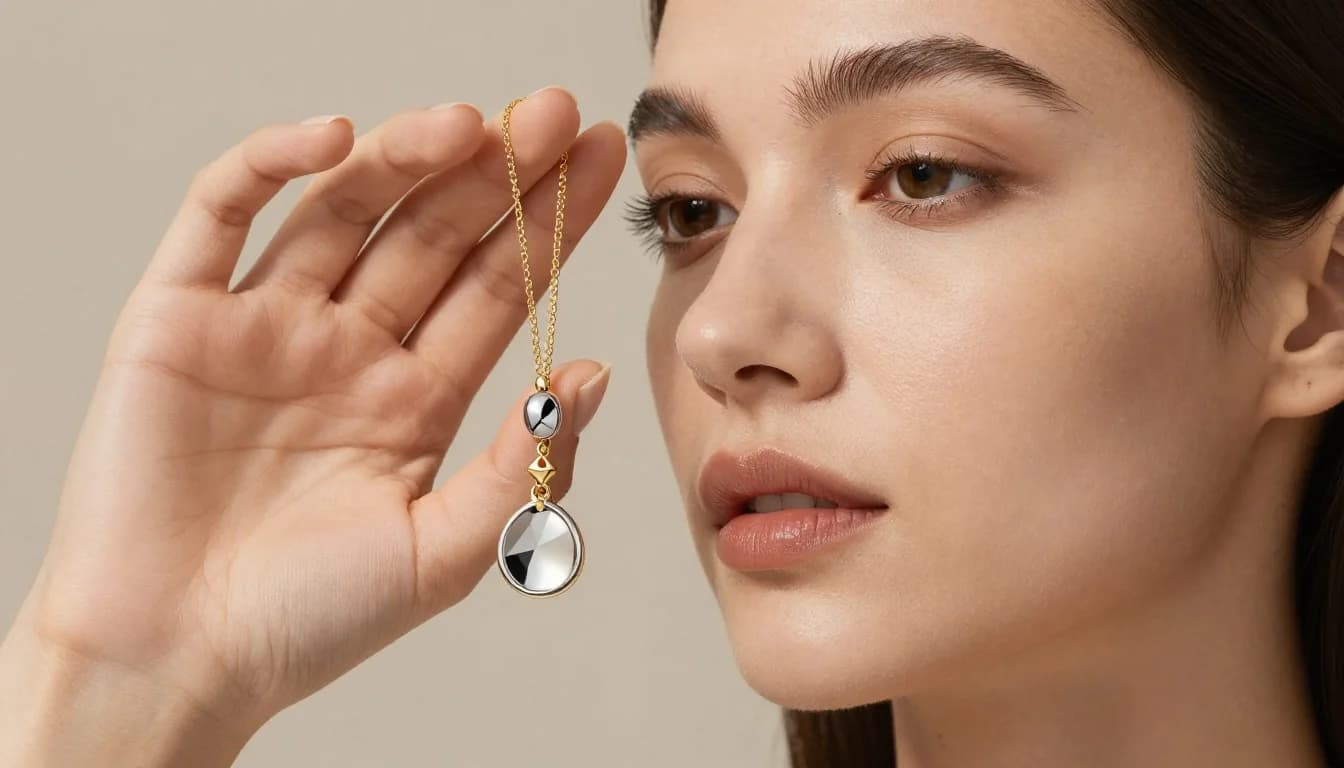
Hold a piece of gold jewelry against your inner wrist or lower jaw. Look at the skin around it: does it look vibrant, healthy, even? Now try silver. Compare. Most people will find one metal makes their skin look clear and the other makes it look slightly dull or grey. Gold flattering = warm undertone. Silver flattering = cool undertone. Can't tell a difference? You're likely neutral. Use real metals, not plated or mixed-metal pieces.
The sun response test (supporting)
How does your skin respond to sun? Warm-toned skin tends to tan relatively easily, developing a golden or bronzy quality. Cool-toned skin tends to burn first, and when it tans, the tan has an ashy or slightly pinkish quality rather than golden. This test is affected by your overall melanin level, so it's not definitive — but if your tan is consistently golden and you rarely burn, warm is likely. If you burn easily and your tan looks grey or pinkish, cool is likely.
Combining tests for confidence
Run the fabric test and the jewelry test. If both point the same direction — white wins AND silver wins, or cream wins AND gold wins — you can be confident in your undertone. If they conflict, you're likely neutral. When in doubt, test a vivid warm color (coral) and a vivid cool color (raspberry) near your bare face. One will make your skin look clearer; the other will introduce a slight clash you can't quite explain. That's your answer.
The Tests That Actually Work
The vein test (unreliable alone)
You've probably heard: blue-purple veins = cool toned, green veins = warm toned. The problem is that veins appear blue-green on most people regardless of undertone, because of how light passes through different layers of skin. Use this as a supporting data point only — never as your sole test. If your veins look unmistakably blue-purple, that does lean cool. If they look very clearly green, that leans warm. But if you're unsure, move to more reliable tests.
Using tan or sun-exposed skin
Testing undertone on recently tanned skin introduces surface color that masks the true undertone. Do the fabric and jewelry tests on your inner wrist or under your jaw — areas that see less sun exposure — for the most accurate reading. Post-summer skin reads warmer than winter skin on almost everyone.
Testing in bathroom lighting
Incandescent bulbs add warm yellow, LED panels can add cool blue or green. Both distort how colors look against your skin. Always test in natural daylight near a window — ideally on an overcast day, which gives the most neutral light. Even pulling a chair next to a window makes a significant difference.
Testing with makeup on
Foundation, bronzer, and blush all introduce artificial color that masks your real undertone. Strip back to bare skin before doing any color test. If you prefer not to go fully bare-faced, at minimum remove any color-adding products from your face and neck before evaluating fabric or jewelry against your skin.
Stop Guessing, Start Wearing Your Colors
Discover Your PaletteUndertone-Based Color Swaps
Simple shifts from the wrong temperature to the right one.
White's cool base makes warm-toned skin look slightly yellowish or washed out. Cream or ivory mirrors the warmth in your skin and reads as clean and fresh.
Cream's yellow base can look slightly sallow against cool-toned skin. Bright white or a cool optical white amplifies the skin's natural clarity.
Grey's cool undertone competes with warm skin, adding an ashy cast. Brown and camel share the warmth in your coloring and read as polished neutrals.
Khaki's yellow base clashes with cool undertones, pulling out sallowness. Slate and navy are cool-temperature neutrals that keep the complexion looking even.
Cool, blue-based colors sit at odds with warm skin's golden base. Coral and terracotta share that warmth and create a harmonious, glowing effect.
Rust and burnt orange have strong yellow-golden bases that can make cool skin look sallow. Raspberry and plum sit in the cool-pink family that harmonizes with cool undertones.
Which Palette Might Be Yours?
Your warm-or-cool answer places you in one half of the seasonal color system. The next step is narrowing to your specific season based on depth and clarity.
Warm: Spring or Autumn
Learn moreCream won your fabric test and gold won your jewelry test? You're warm-toned, which places you in either Spring or Autumn. Light, bright, clear warm coloring points toward Spring (Light Spring, Warm Spring, or Bright Spring). Deeper, richer, more muted warm coloring points toward Autumn (Soft Autumn, Warm Autumn, or Deep Autumn).
Cool: Summer or Winter
Learn moreWhite won your fabric test and silver won your jewelry test? You're cool-toned, placing you in either Summer or Winter. Soft, gentle, medium cool coloring points toward Summer (Light Summer, Soft Summer, or Cool Summer). High-contrast, vivid, or deep cool coloring points toward Winter (Deep Winter, Cool Winter, or Bright Winter).
Neutral: Soft Summer or Soft Autumn
Learn moreIf neither warm nor cool clearly won your tests, you likely have neutral undertones. Neutral-undertoned people often fit best in Soft Summer (cool-leaning neutral, muted) or Soft Autumn (warm-leaning neutral, muted). Both seasons suit balanced, not-too-extreme colors in either direction.
Find Your Exact Colors
Knowing your undertone — warm or cool — is the critical first step. But within warm and cool there's still a spectrum of depth and clarity that determines exactly which shades work best for you specifically. A personalized color analysis uses your full combination of undertone, depth, contrast, and coloring to identify the precise palette that makes you look your best — not just 'warm colors' or 'cool colors,' but the exact shades within those families.
Get Your Color AnalysisFrequently Asked Questions About Cool Toned?
What does warm toned skin look like?
Warm-toned skin has a golden, peachy, or yellow quality beneath the surface. It tends to tan relatively easily and develop a golden or bronze quality in sun. Warm-toned people typically look better in gold jewelry than silver, and in cream or ivory rather than stark white. The skin can range from very fair (with peachy undertones) to very deep (with golden or bronze undertones) — warmth is not about depth.
What does cool toned skin look like?
Cool-toned skin has a pink, rosy, or blue-based quality beneath the surface. It tends to burn more easily in sun, and tans with a slightly ashy or pinkish quality rather than golden. Cool-toned people typically look better in silver jewelry than gold, and in bright white rather than cream. Cool skin can also range from very fair (with pink undertones) to very deep (with blue-black or rosy undertones).
Can warm toned people wear cool colors?
Yes — undertone doesn't mean you can only wear one color family. Warm-toned people can wear blue, purple, and pink successfully as long as those colors have enough warmth in them. Teal and turquoise (warm blues), warm pink, and violet-red can all work on warm-toned skin. The key is avoiding the sharpest, iciest, most blue-based versions of those colors.
Can cool toned people wear warm colors?
Yes — cool-toned people can wear earthy and warm-seeming colors, particularly if those colors have a slight cool quality within them. Forest green (cooler than olive), burgundy (cooler than rust), and deep navy (a cool take on a warm direction) can all work. The colors to truly avoid are the most yellow-golden ones: bright mustard, warm camel, pure orange.
Is olive skin warm or cool toned?
Olive skin is famously tricky because it combines green-yellow and cool qualities. Most people with olive skin have neutral-to-warm undertones, but the green cast can make them test as cool in some methods. True olive skin often does best in muted, earthier versions of colors — not too warm and not too cool. The Soft Autumn or Deep Autumn season often fits olive skin well, but individual testing is always more accurate than generalizations.
What is the most accurate way to determine warm vs cool toned?
The most accurate home method combines the white-vs-cream fabric test with the gold-vs-silver jewelry test, both done bare-faced in natural daylight. If both tests agree, you can be confident. If they conflict, you're likely neutral undertoned. For the most accurate professional determination, a color analyst will use specially made draping swatches in controlled lighting to compare how your skin responds to pure warm vs cool versions of the same hue.