How to Dress forYour Unique Coloring
Some colors make you look alive. Others make you look like you haven't slept in a week. The difference has nothing to do with the color itself and everything to do with how it interacts with your unique combination of skin, hair, and eyes. Your natural coloring is a built-in palette — a set of pigments that either harmonize with or fight against whatever you put next to them. Dressing for your coloring means working with that palette instead of against it.
Discover Your ColorsYour Coloring Is a System, Not a Single Feature
Most color advice focuses on skin tone alone. But your coloring is a three-part system: skin undertone, hair value and warmth, and eye color and contrast. These three features create a signature that determines which colors enhance you. A fair person with dark hair and blue eyes needs completely different colors than a fair person with blonde hair and green eyes — even though their skin depth is identical. The full picture matters.
Undertone is the first variable. Your skin leans warm (golden, peachy, olive), cool (pink, rosy, blue-red), or neutral. This determines your color temperature — whether warm or cool shades harmonize with your face. But undertone alone doesn't tell the whole story. Contrast is the second variable. The difference between your lightest feature (usually skin) and your darkest (usually hair) determines how bold or soft your clothing colors should be.
The third variable is your overall value — how light or dark your coloring reads as a whole. Light coloring (fair skin, light hair, light eyes) gets overwhelmed by dark, heavy colors. Deep coloring (dark skin, dark hair, dark eyes) can carry rich, saturated shades that would swallow lighter features. When you match all three variables — temperature, contrast, and value — to your clothing choices, you look effortlessly put together.
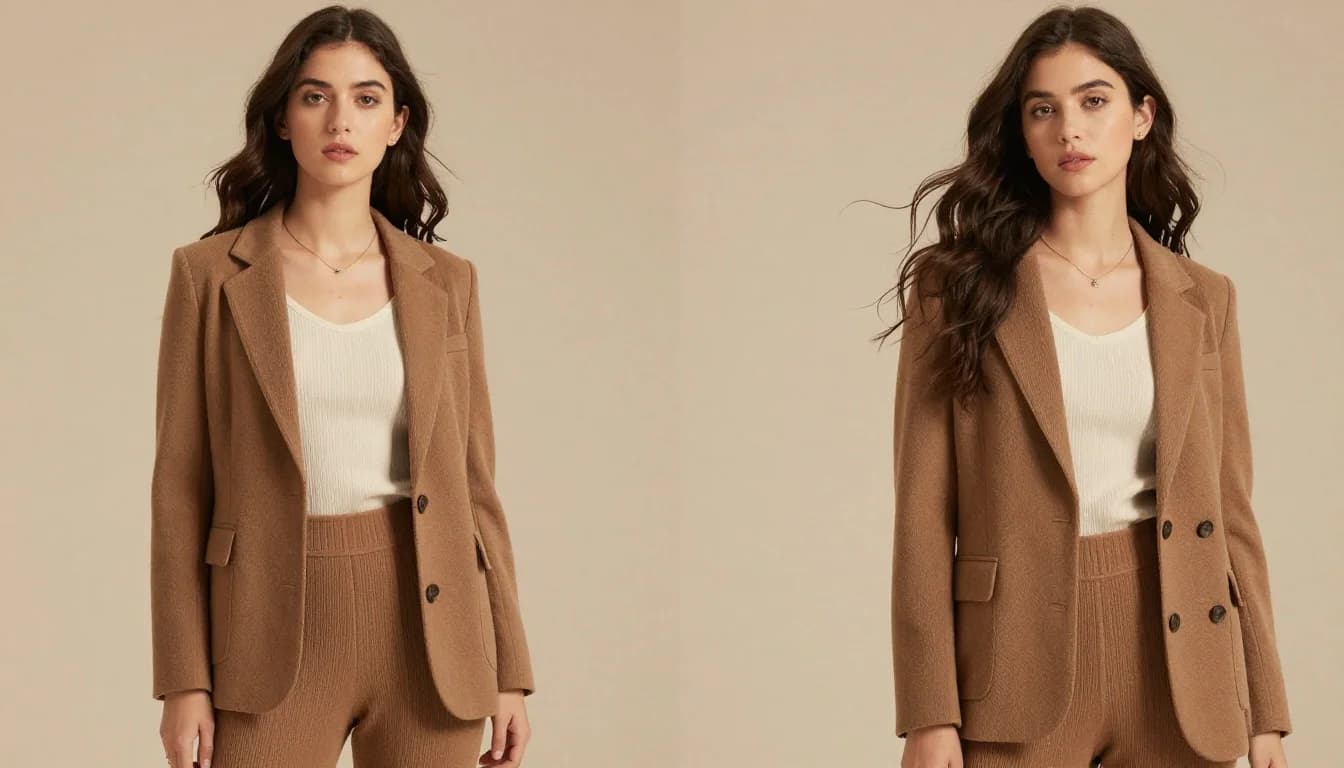
Color Families Matched to Coloring Types for Your Unique Coloring
Warm and Light Coloring
Fair skin with golden undertones, light warm hair (strawberry blonde, golden brown, warm blonde), and warm eyes (amber, warm green, hazel). Your palette is fresh, light, and warm. Colors should feel like a spring garden — clear and bright but never dark or heavy. Dark colors will overpower you. Cool colors will clash with your warmth.
Warm and Deep Coloring
Medium-to-dark skin with golden or olive undertones, dark warm hair (warm brown, auburn, black with warm cast), and warm eyes (dark brown, warm hazel, amber). Your palette is rich, earthy, and saturated. You carry depth beautifully — colors should be bold and grounded. Pale, icy colors will look disconnected from your natural richness.
Cool and Light Coloring
Fair skin with pink or neutral-cool undertones, light cool hair (ash blonde, light brown, platinum), and cool eyes (blue, grey, cool green). Your palette is soft, cool, and gentle. Colors should feel like a watercolor wash — muted and delicate. Warm, bright, or heavy colors will overwhelm your soft, cool signature.
Cool and Deep Coloring
Medium-to-dark skin with pink or blue undertones, dark cool hair (black, deep ash brown, cool dark brown), and contrasting cool eyes (dark brown, icy blue, grey-green). Your palette is bold, cool, and high-contrast. You can carry the most dramatic, saturated cool colors without being overwhelmed. Muted or warm tones will look muddy on you.
Ready to Find Your Best Colors?
Get Your Color AnalysisPractical Ways to Dress for Your Coloring Every Day
Start with what you already know works
Look at photos of yourself where you look particularly healthy and vibrant. What are you wearing? These colors are already proven. Your friends' compliments are data. 'You look great in that blue' means that specific blue harmonizes with your coloring. Collect these data points — they reveal your natural palette before any formal analysis.
Mirror-test new colors before buying
Hold a garment under your chin in natural light. Look at your face, not the fabric. Does your skin look even and clear? Do your eyes pop? Or does your skin look dull, red, or sallow? Your face tells you instantly whether a color works. This thirty-second test prevents ninety percent of color mistakes. Trust what you see, not what you wish.
Use the face-proximity rule
Colors near your face — tops, scarves, collars, necklaces — have the biggest impact on how your coloring reads. Colors far from your face — shoes, bags, pants — have minimal impact. This means your ideal palette matters most for your upper body. You can wear almost any color as a bottom or accessory without undermining your coloring.
Match your outfit contrast to your feature contrast
If your hair is very dark and your skin is very light, you have high natural contrast. Outfits with clear light-dark contrast will look intentional on you: navy suit with white shirt, black turtleneck with light denim. If your features are all similar in value, tonal outfits — warm medium tones head to toe, or cool soft tones blended together — will make you look polished.

Colors That Fight Your Natural Coloring
Wrong-temperature brights near the face
A warm-toned bright like orange on cool coloring (or a cool-toned bright like fuchsia on warm coloring) creates instant visual dissonance. The brighter the wrong-temperature color, the more obvious the clash. Your face looks drained, flushed, or sallow depending on the specific mismatch.
Colors at the wrong value for your depth
Light coloring in a head-to-toe dark outfit looks swallowed. Deep coloring in an all-pastel outfit looks washed out. Your clothing value should echo your natural value range — light features in light-to-medium colors, deep features in medium-to-dark colors, with strategic exceptions for contrast and accent.
Contrast levels that don't match your features
High-contrast coloring (dark hair, light skin) looks best in outfits with clear contrast — dark and light together. Low-contrast coloring (hair, skin, and eyes all similar in value) looks best in tonal, blended combinations. Mismatched contrast — like a low-contrast person in a stark black-and-white outfit — creates a visual disconnect between the clothes and the person.
Stop Guessing, Start Wearing Your Colors
Discover Your PaletteSwaps That Align Your Wardrobe With Your Coloring
Stop fighting your natural palette and start working with it.
Even basic grey has temperature. Warm grey has a beige or olive undertone. Cool grey has a blue undertone. Matching your grey to your undertone transforms the most basic item from 'fine' to 'flattering.'
Stark white is cool and high-contrast. It looks sharp on cool, high-contrast coloring but washes out warm or soft coloring. Ivory and ecru maintain the same polished formality with a warm softness that suits you better.
Bright red is warm and saturated. Cool, muted coloring harmonizes with the same red family in darker, bluer, softer versions. You still wear red — just the red that belongs in your palette.
Pastel pink is light and cool — it disappears against deep warm coloring. Warm, rich alternatives carry the same vibrancy at a depth and temperature that works with your features instead of floating disconnected from them.
Scarves sit right next to your face. A warm plaid near warm skin enhances your coloring. A cool plaid near warm skin subtly drains it. The visual difference is noticeable even across a room.
Denim has undertone too. Cool, bleached washes lean blue-grey. Warm, vintage washes lean blue-gold. Matching your denim temperature to your undertone creates a more cohesive outfit from the ground up.
Seasonal Color Theory Gives You the Complete Picture
Seasonal color analysis maps your exact combination of undertone, contrast, and value to one of twelve refined palettes. Your season tells you precisely which colors will make you look your healthiest and most vibrant.
Warm Spring
Learn moreWarm springs have warm undertones, light-to-medium value, and clear (not muted) coloring. Your colors are fresh and warm — coral, peach, turquoise, golden yellow, warm red. Avoid anything dark, muted, or cool. Your palette should feel vibrant and sun-warmed, never heavy or dusty.
Cool Winter
Learn moreCool winters have cool undertones, medium-to-deep value, and high contrast. Your colors are bold and cool — true red, emerald, sapphire, stark white, jet black. Avoid anything warm, muted, or light-washed. Your palette should feel crisp and dramatic, never soft or earthy.
Soft Summer
Learn moreSoft summers have cool-to-neutral undertones, medium value, and low contrast. Your colors are gentle and cool-muted — dusty rose, soft lavender, muted teal, powder blue, cool mauve. Avoid anything bright, warm, or high-contrast. Your palette should feel blended and refined, like a misty morning.
Your Coloring Already Knows What Looks Best
You've been carrying your perfect color palette with you your entire life — it's written in the combination of your skin, hair, and eyes. Dressing for your coloring isn't about following rules. It's about understanding why certain colors have always made you look and feel better, and building a wardrobe around that knowledge. A personalized color analysis gives you the precise map — your undertone, contrast level, value range, and the specific shades that will make your features come alive.
Get Your Color AnalysisFrequently Asked Questions About Your Unique Coloring
How do I know what colors suit my coloring?
Look at three things: your undertone (warm, cool, or neutral), your contrast level (the difference between your lightest and darkest features), and your overall value (how light or dark your coloring reads as a whole). Colors that match all three variables will enhance your appearance. The quickest test is holding fabric under your chin in natural light and watching whether your face brightens or dulls.
Does hair color affect what clothing colors look good on me?
Significantly. Your hair is the largest block of color next to your face. Dark hair creates a high-contrast frame that can carry bold colors. Light hair creates a softer frame that works better with gentler tones. Warm-toned hair (golden, auburn, warm brown) harmonizes with warm clothing. Cool-toned hair (ash, platinum, cool black) harmonizes with cool clothing.
What is seasonal color analysis and how does it work?
Seasonal color analysis categorizes your natural coloring into one of twelve sub-seasons based on three factors: temperature (warm or cool undertone), value (light or deep), and chroma (clear/bright or muted/soft). Each sub-season has a defined palette of colors that harmonize with that specific combination. It's the most precise system for identifying exactly which shades suit you.
Can my coloring type change over time?
Your undertone is permanent — it's determined by your melanin composition and doesn't change. However, your contrast and value can shift. Grey hair reduces contrast. Tanning temporarily deepens value. Hair dye changes your frame color. If you dye your hair significantly warmer or cooler, you may shift which clothing colors look best near your face, even though your skin undertone hasn't changed.
What if I don't like the colors that suit my coloring?
Wear your favorites away from your face — as pants, skirts, bags, shoes, or belts. Keep your most flattering colors near your face and use the face-proximity rule as a guideline, not a cage. You can also often find a version of your favorite color that's been shifted toward your palette. Love orange but you're cool-toned? A blue-red version of coral might satisfy the same craving while actually flattering you.