What Skin ToneSuits Purple?
Purple is one of the rare colors that genuinely suits almost everyone — because the purple spectrum is enormous. From cool lavender to warm plum, from vivid violet to deep eggplant, there's a purple for every undertone, every depth, and every contrast level. The trick is finding your specific purple, not just grabbing any purple off the rack. Temperature and depth are everything.
Discover Your ColorsWhy Purple Is Uniquely Versatile
Purple sits between red (warm) and blue (cool) on the color wheel. That means purple can lean either direction. A warm purple — plum, warm violet, mulberry — pulls toward the red side and flatters warm undertones. A cool purple — lavender, true violet, royal purple — pulls toward the blue side and flatters cool undertones. This dual nature is why purple works across the entire range of skin tones.
Depth matters too. Light purples — lilac, lavender, soft wisteria — work for light and muted coloring. Deep purples — eggplant, deep plum, blackberry — work for deep and high-contrast coloring. Medium purples — amethyst, iris, true violet — work for medium coloring. The lightness-darkness spectrum in purple is broader than in most colors, giving you precise options.
The one purple that works for almost nobody? A purple that doesn't match either variable — like a warm bright orchid on muted cool skin, or a cool icy lilac on deep warm skin. When the purple's temperature and depth both mismatch your coloring, it looks disconnected. But when even one variable matches, purple starts to look good. When both match, it looks exceptional.
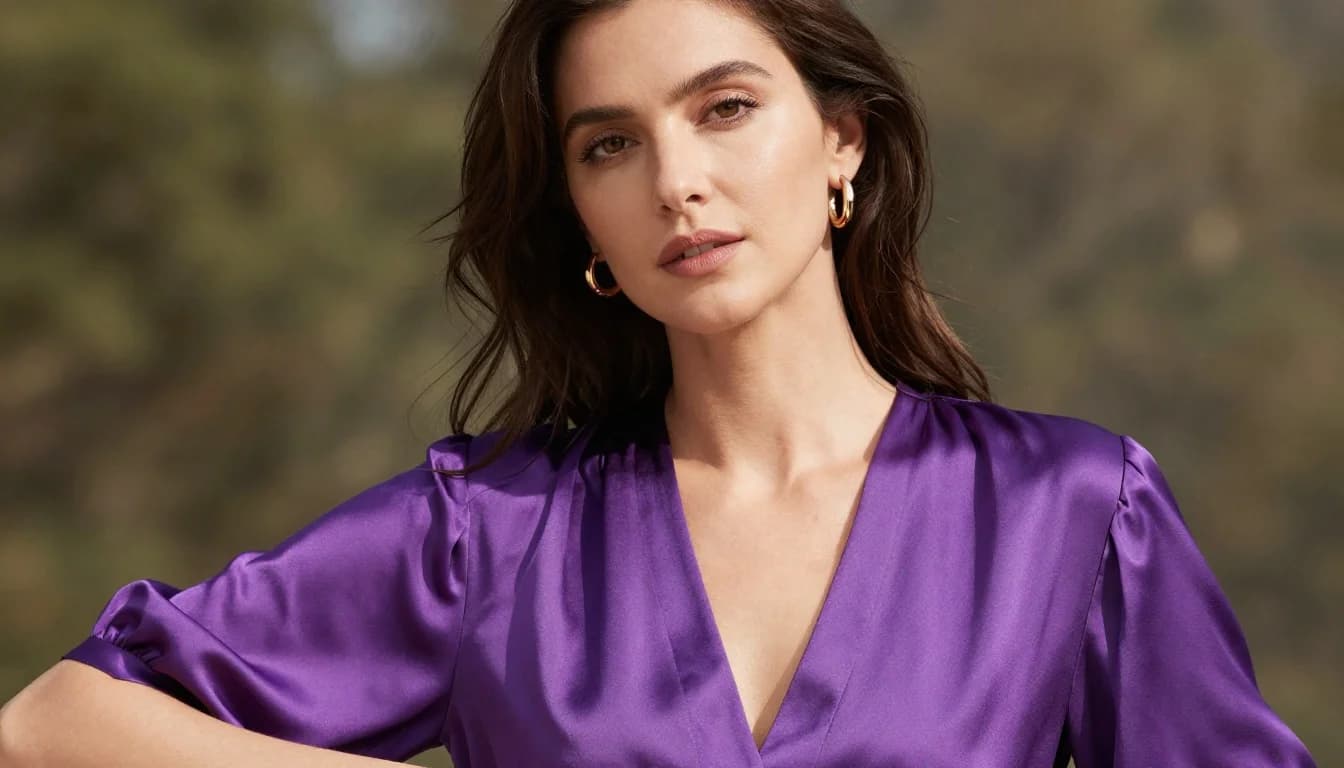
The Right Purple for Your Skin Tone for Suits Purple?
Cool Undertones: Cool & Blue-Based Purples
Cool skin tones — pink, blue, or neutral-cool — are flattered by purples that lean toward blue. Royal purple is rich and unmistakably cool. True violet is the purest blue-purple — striking on cool coloring with enough depth. Cool lavender is the light, soft version for Light Summer and Cool Summer. Deep amethyst provides depth for Cool Winter and Deep Winter. The blue base in these purples harmonizes with cool skin's natural undertone.
Warm Undertones: Warm & Red-Based Purples
Warm skin tones — golden, olive, peachy — are flattered by purples that lean toward red. Plum is the warmest, richest purple — it has a red-wine quality that echoes golden warmth. Warm violet bridges purple and magenta with a warm lean. Mulberry is deeper and earthier. Warm orchid is brighter and works for Warm Spring's clear energy. The red base in these purples connects to the warmth in the skin.
Deep Coloring: Rich & Saturated Purples
Deep skin tones need purple with depth and saturation. Light lavender can look disconnected against deep skin — not enough contrast, not enough richness. Eggplant is the deepest, most dramatic purple. Deep plum has warmth and depth. Blackberry straddles purple and black. Rich grape is vivid and saturated. These purples have the weight to stand alongside deep coloring without looking faded.
Muted Coloring: Soft & Greyed Purples
Soft Autumn and Soft Summer have low-saturation, blended coloring that vivid purple overwhelms. Dusty mauve is purple with grey softness built in — perfect for muted warmth. Soft wisteria is a light, muted blue-purple. Muted lavender has enough grey to match soft coloring without looking bright. Greyed purple is the most neutral — a purple that's been softened until it almost reads as a neutral.
Ready to Find Your Best Colors?
Get Your Color AnalysisHow to Wear Purple for Maximum Impact
Identify warm vs cool purple first
Before worrying about light or dark, determine your purple temperature. Hold a plum (warm purple) and a royal purple (cool purple) near your face. One will make your skin glow; the other will make it look slightly off. That tells you which side of the purple spectrum belongs to you. Everything else — depth, saturation, shade — is secondary to this temperature match.
Use purple as a statement or a neutral
Deep, muted purples — eggplant, dark plum, dusty mauve — function as neutrals. They pair with cream, navy, grey, and black. Vivid purples — royal, violet, bright orchid — are statement colors that work best as the focal point. Knowing which role your purple plays determines how you style it.
Pair purple with its best companions
Warm purples pair beautifully with cream, camel, olive, and warm grey. Cool purples pair with white, silver, navy, and charcoal. Purple and green create a sophisticated complementary contrast. Purple and pink create a tonal, modern pairing. Avoid pairing warm and cool purples in the same outfit — the temperature clash reads as accidental.
Wear your most flattering purple near the face
Like all colors, purple's impact is strongest near the face. A purple blouse, scarf, or necklace directly interacts with your skin tone. Purple trousers or shoes are less impacted by undertone matching. If you're testing which purple suits you, try it at the neckline first — that's where the flattering-or-not distinction is most visible.
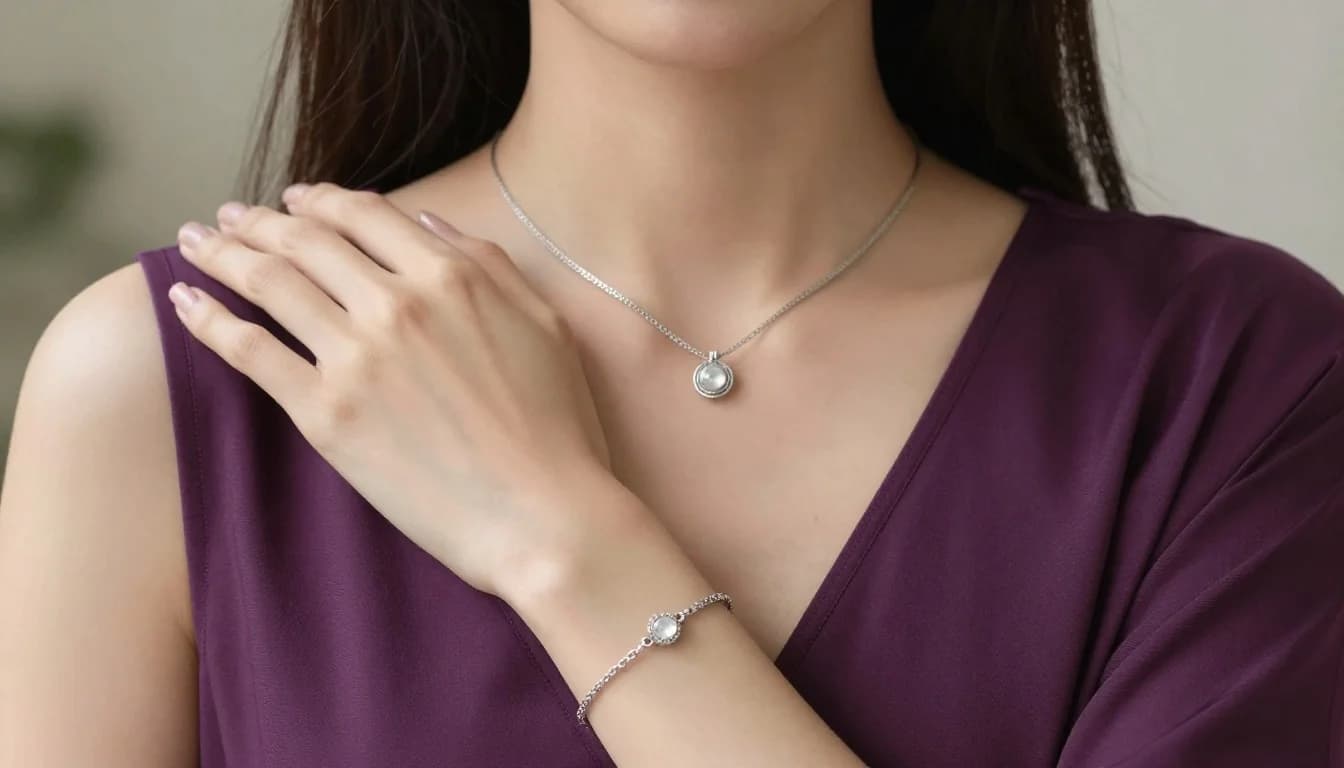
Purples That Fight Your Skin Tone
Cool icy purple on warm skin
Icy lavender and cool periwinkle have a strong blue base. On warm golden or olive skin, the cool blue creates temperature conflict — the skin looks slightly grey or muddy. Warm skin needs plum, warm violet, or mulberry. The warmer the purple's red base, the better it harmonizes with warm undertones.
Warm plum on very cool skin
Plum and mulberry have a red-warm base. On very cool pink or blue-toned skin, the warmth creates a slight clash — the purple looks muddy rather than rich. Cool skin needs royal purple, true violet, or cool lavender. The cooler the purple's blue base, the cleaner it looks on cool coloring.
Vivid bright purple on muted coloring
Vivid electric purple or neon violet overwhelms Soft Autumn and Soft Summer. The saturation gap between the color and the coloring is too large — the purple wears you rather than the other way around. Muted seasons need dusty, greyed, or softened purples that match their blended quality.
Pale lilac on deep coloring
Very light lilac against deep skin can look faded or disconnected — like the purple has been washed out. Deep coloring needs purples with depth: eggplant, deep plum, rich grape. The purple should have enough weight to match the richness of the skin.
Stop Guessing, Start Wearing Your Colors
Discover Your PaletteFind Your Purple
Purple's range is so wide that 'purple doesn't suit me' almost always means 'I haven't found my purple yet.'
Plum's red-warm base clashes with cool skin. Royal purple's blue base harmonizes with cool undertones and looks rich rather than muddy.
Cool lavender makes warm skin look grey. Warm plum resonates with golden undertones and makes the skin look luminous.
Electric violet overwhelms soft features. Dusty mauve has the greyed quality that matches muted coloring and looks sophisticated rather than loud.
Pale lilac fades against deep skin. Deep purples have the richness and weight to create intentional contrast with deep coloring.
Deep purple functions as a neutral with more personality than black. It pairs with cream, grey, and navy while adding depth and warmth to your outfit.
Purple is inherently eye-catching but universally flattering when the temperature is right. A vivid purple in your correct temperature is one of the most reliably striking choices you can make.
Your Season, Your Purple
Every season has a signature purple. The purple spectrum is wide enough that no season is left out — the question is which depth, temperature, and saturation of purple belongs to your palette.
Cool Winter
Learn moreCool Winter's purple is rich, cool, and commanding. Royal purple, deep violet, and icy plum are your territory. These purples have a strong blue base that harmonizes with your cool undertone and enough depth to match your contrast. Purple is one of Cool Winter's most powerful colors — bold, saturated, and unmistakably cool.
Deep Autumn
Learn moreDeep Autumn's purple is warm, deep, and earthy. Plum, eggplant, warm aubergine, and deep mulberry are your signature shades. These purples lean toward red-warm and have the depth and richness that Deep Autumn's coloring demands. Cool purples look disconnected on you; warm deep purples look like they were made for your palette.
Soft Summer
Learn moreSoft Summer's purple is muted, cool, and gentle. Dusty lavender, muted mauve, soft periwinkle, and greyed violet are your purples. Vivid or deep purples overwhelm your blended coloring. The grey undertone in your purples should match the muted quality of your features — subtle, sophisticated, and never loud.
Find Your Exact Purple
Purple is one of the most universally flattering color families — there truly is a shade for every skin tone. But the distance between your perfect purple and a wrong purple can be just a few degrees of warmth or depth. Your seasonal palette narrows the purple spectrum to the exact shades that make your skin glow. Once you know your purple, you'll wonder why you ever wore anything else.
Get Your Color AnalysisFrequently Asked Questions About Suits Purple?
What skin tone suits purple?
Every skin tone suits purple — the spectrum from warm plum to cool violet covers all undertones. Warm skin suits warm purples (plum, mulberry, warm orchid). Cool skin suits cool purples (royal purple, violet, lavender). Deep skin suits rich purples (eggplant, deep plum). Light skin suits soft purples (lilac, wisteria). The key is matching temperature and depth, not avoiding purple.
What shade of purple suits warm undertones?
Plum, warm violet, mulberry, and warm orchid. These purples lean toward red on the purple spectrum, which harmonizes with golden, peachy, or olive skin. Avoid cool-based purples like icy lavender and royal purple — their blue base clashes with warm undertones and makes the skin look grey.
What purple suits cool undertones?
Royal purple, true violet, cool lavender, and deep amethyst. These purples lean toward blue, harmonizing with pink or blue-toned skin. Avoid warm-based purples like plum and mulberry on very cool skin — their red warmth creates a muddy effect. The bluer the purple, the better it works on cool coloring.
Can everyone wear purple?
Yes. Purple is one of the most universally wearable color families because the spectrum spans warm to cool and light to deep. The challenge is finding your specific position on that spectrum. A Warm Autumn in royal purple will look off. A Cool Winter in warm plum will look off. But each has a purple that's exceptionally flattering.
Is purple a good neutral?
Deep, muted purples absolutely function as neutrals. Eggplant, dark plum, and dusty mauve pair with cream, grey, navy, camel, and black just like traditional neutrals do. They add depth and sophistication without competing with other colors. Many stylists consider deep purple the most interesting neutral after navy.