How to Wear BurgundyThe Most Sophisticated Color in Fashion
Burgundy is the color people reach for when they want to look elegant without trying too hard. It has the richness of red without the volume. The depth of black without the predictability. The warmth of brown without the casualness. But burgundy is not one color — it spans from cool wine to warm oxblood to muted maroon, and the version that makes one person look effortlessly polished can make another look drained and heavy. The difference, as always, is undertone.
Discover Your ColorsWhy Burgundy Varies So Much by Person
Burgundy is a complex color — it contains red, blue, and brown in varying proportions. A burgundy that leans blue-red (wine) is cool. A burgundy that leans brown-red (oxblood) is warm. A burgundy that leans purple-red (plum burgundy) is deeply cool. Each variation reflects different colored light onto your skin, and that reflected light either harmonizes with your undertone or clashes with it.
The depth of burgundy also matters. Because burgundy is inherently dark, it absorbs significant light. This light-absorbing quality creates shadows near the face that can either add drama and definition (on high-contrast coloring) or add heaviness and dullness (on low-contrast coloring). People with high contrast — dark hair, light skin — can wear the darkest burgundies near their face. People with lower contrast need lighter or brighter burgundies, or need to keep burgundy below the face.
Burgundy's sophistication comes from its association with wine, velvet, and luxury. But that sophistication only reads when the shade matches the wearer. A mismatched burgundy looks like a color that is wearing the person rather than the other way around. The goal is a burgundy that looks like a natural extension of your coloring — richly complementary, never fighting for attention.

Your Best Burgundy by Undertone for The Most Sophisticated Color in Fashion
Cool Burgundy Shades
Cool undertones look best in burgundy with blue or purple undertones. Wine — a blue-red burgundy — is the classic cool-toned version and looks stunning against pink-cool skin. Berry burgundy has a brighter, more saturated quality. Plum wine adds purple depth. These cool burgundies reflect cool light that harmonizes with rosy skin and makes it look clear and luminous.
Warm Burgundy Shades
Warm undertones look best in burgundy with brown or orange undertones. Oxblood — a brownish-red burgundy — is the workhorse warm burgundy that looks naturally sophisticated on golden skin. Warm maroon has earthy depth. Brick burgundy has subtle orange warmth. Rich claret balances warmth with richness. These warm burgundies add depth without creating the cold, heavy effect that cool burgundies create on warm skin.
Neutral Burgundy Shades
Neutral undertones can wear balanced burgundy that does not lean strongly warm or cool. True burgundy — the balanced midpoint — is your most versatile shade. Classic deep red has slight vibrancy without temperature extremes. Balanced wine splits the difference between cool wine and warm oxblood. These middle-ground burgundies work because they match your own balanced undertone.
Colors That Elevate Burgundy
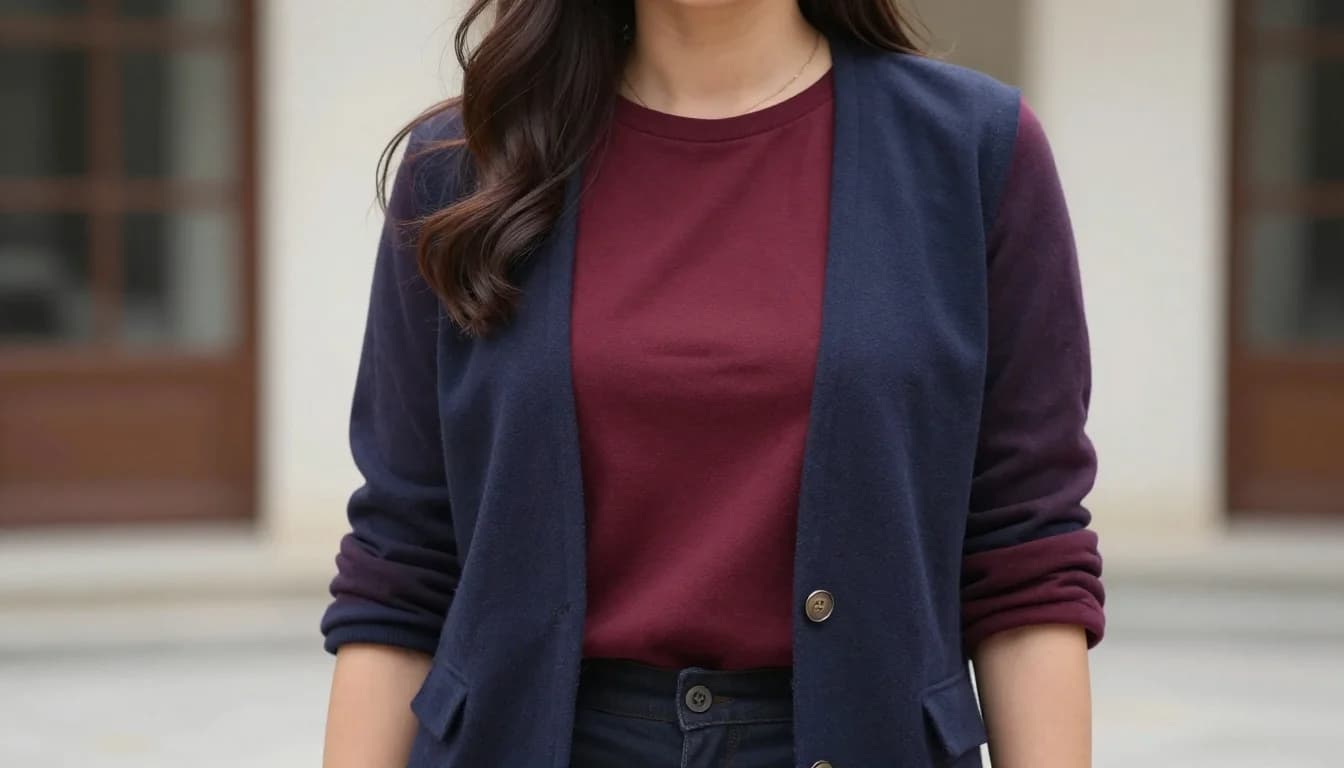
Burgundy pairs beautifully with warm neutrals and soft tones. Cream and burgundy is one of the most elegant combinations in fashion — warm, rich, and effortlessly polished. Camel and burgundy creates an autumnal sophistication. Navy and burgundy is a refined alternative to black and red. Soft blush pink and burgundy has a romantic, contemporary quality that photographs beautifully.
Ready to Find Your Best Colors?
Get Your Color AnalysisHow to Style Burgundy for Every Season
Burgundy in Autumn and Winter
This is burgundy's natural season. A burgundy wool coat over cream knitwear. A burgundy cashmere sweater with dark denim. A burgundy velvet blazer for holiday events. The depth and richness of burgundy matches the visual weight of cold-weather fabrics — wool, cashmere, velvet, leather. In winter, burgundy is the color that replaces black with sophistication.
Burgundy in Spring and Summer
Burgundy can work year-round if you adjust the fabric and shade. A light burgundy silk camisole with white linen trousers. A sheer burgundy blouse with denim. Berry burgundy in a lightweight cotton dress. The key is lighter fabrics and lighter burgundy shades — full-depth oxblood in heavy wool does not translate to July. Let the burgundy breathe through fabric weight.
Burgundy at Work
Burgundy is one of the most effective professional colors. A burgundy blouse with charcoal trousers reads as authoritative without being aggressive. A burgundy pencil skirt with a cream blouse is elegant. A burgundy tie or pocket square adds personality to a grey suit. Burgundy signals confidence, taste, and intention — exactly what professional dressing should communicate.
Burgundy for Evening
A burgundy dress or suit is the most sophisticated alternative to black for evening events. Deep burgundy in silk, satin, or velvet looks luxurious under evening lighting. Pair with gold jewelry for warm undertones, silver or crystal for cool undertones. Burgundy at night reads as intentional, elegant, and memorable — qualities that black achieves through familiarity but burgundy achieves through beauty.
Burgundy Mistakes That Look Heavy
Cool wine burgundy on warm skin
A blue-based wine burgundy against golden or peachy skin creates a cold, heavy effect that drains warmth from the complexion. The cool undertone in the burgundy fights the warm undertone in the skin, making the face look flat and shadowed. Switch to oxblood or warm maroon for the same richness with compatible warmth.
Warm oxblood on cool skin
A brown-based oxblood against cool, pink skin adds a muddy, brownish cast that dulls the complexion. The warmth in the burgundy overwhelms the coolness in the skin. Switch to wine or berry burgundy for burgundy depth with compatible cool undertones.
Head-to-toe dark burgundy
An entirely dark burgundy outfit — burgundy top, burgundy trousers, burgundy shoes — creates an oppressive visual weight that makes the wearer look smaller and heavier. Burgundy needs contrast. A burgundy top with cream trousers, or a burgundy dress with nude heels, allows the color to read as rich rather than heavy.
Burgundy with bright red
Burgundy and bright red create an uncomfortable visual tension — they are similar enough to look like they should match but different enough to clash. The bright red makes the burgundy look muddy, and the burgundy makes the red look garish. Pair burgundy with navy, cream, black, or blush instead.
Stop Guessing, Start Wearing Your Colors
Discover Your PaletteBurgundy Styling Swaps for Richer Looks
Replace heavy or mismatched combinations with balanced, elegant alternatives.
Black is invisible. Burgundy is memorable. A burgundy coat elevates every outfit underneath it and stands out in a sea of black and grey while remaining equally sophisticated.
The undertone shift from cool to warm eliminates the draining effect. Oxblood has the same richness as wine burgundy but harmonizes with golden and peachy skin tones.
Monochrome burgundy is visually heavy. Pairing with cream or camel lightens the combination and lets the burgundy read as rich and intentional rather than oppressive.
Burgundy at night is more luxurious and memorable than black. In silk or velvet, it catches light beautifully and flatters most skin tones with a warm, sophisticated glow.
When your lipstick undertone matches your outfit undertone, the combination looks cohesive. A cool lip with a warm outfit creates subtle dissonance at face level.
Black with burgundy can feel dark and heavy. Cognac leather adds warmth that complements burgundy. Nude accessories lighten the overall impression and keep the focus on the color.
Your Best Burgundy by Season
Burgundy appears in most seasonal palettes but varies significantly in temperature, depth, and saturation across seasons:
Deep Autumn
Learn moreYour burgundy is warm, rich, and earthy — oxblood, warm maroon, and brick burgundy. These warm-based burgundies match your deep, warm coloring naturally. Pair with camel, olive, and cream for your most polished autumn combinations. Burgundy may be your single most flattering dark neutral.
Deep Winter
Learn moreYour burgundy is cool, deep, and dramatic — wine, dark berry burgundy, and cool crimson. These blue-based burgundies match your high-contrast, cool coloring. You can handle the deepest, most saturated burgundies because your natural contrast anchors them. Pair with crisp white and silver for maximum impact.
Soft Autumn
Learn moreYour burgundy is muted, warm, and medium-depth — dusty maroon, muted brick, and soft oxblood. These desaturated warm burgundies match your gentle, earthy coloring without overwhelming it. Avoid vivid or very dark burgundies. Your version should feel like a warm, faded vintage fabric.
Find Your Perfect Burgundy
Burgundy is the color that replaces black in the wardrobe of someone who wants more beauty from their basics. But the wrong burgundy — too cool, too warm, too dark, too bright — loses the effortless sophistication that makes burgundy special. A personalized color analysis identifies your exact burgundy shade and shows you the pairings that make it look like your signature color.
Get Your Color AnalysisFrequently Asked Questions About The Most Sophisticated Color in Fashion
What skin tone does burgundy look best on?
Burgundy flatters most skin tones when the undertone matches. Cool burgundy (wine) suits cool, pink-toned skin. Warm burgundy (oxblood) suits warm, golden skin. Deep skin tones look stunning in both because the contrast between deep skin and rich burgundy creates vibrant luminosity. The shade matters more than the skin tone.
Is burgundy warm or cool?
Burgundy can be either, depending on the mix. Wine burgundy (blue-red) is cool. Oxblood (brown-red) is warm. Plum burgundy (purple-red) is deeply cool. Maroon (brown-red) is warm. True burgundy sits balanced. Check whether your burgundy leans blue or brown to determine its temperature.
What colors go well with burgundy?
Cream is the most elegant burgundy companion. Camel creates autumnal richness. Navy adds refined depth. Blush pink provides romantic contrast. Black is classic but can feel heavy — break it with a lighter element. Gold accessories add warmth. Silver accessories add cool contrast. Avoid pairing with bright red or orange.
Can I wear burgundy in summer?
Yes, in lighter fabrics and lighter shades. Berry burgundy in cotton, sheer burgundy in silk, or wine burgundy in a lightweight dress all work for warm weather. Avoid heavy-weight wool or velvet burgundy in summer — the fabric-color combination feels seasonally wrong. Summer burgundy should feel light and breezy.
Is burgundy a good alternative to black?
Burgundy is the best alternative to black for anyone who wants more color in their wardrobe without sacrificing sophistication. It has the same visual weight and formality as black but adds warmth, richness, and visual interest. A burgundy coat, blazer, or dress can replace its black equivalent in almost every scenario and look more intentional.