How to Wear CoralSo It Flatters, Not Clashes
Coral is one of the most requested colors in fashion — and one of the most returned. People love the idea of coral: warm, fresh, lively, summery. But the reality is that coral exists on a massive spectrum from pink-coral to orange-coral to peach-coral, and the wrong shade on the wrong undertone creates an instant clash that makes skin look either sallow or sunburnt. When coral works, it is one of the most flattering colors you can wear. When it misses, it misses hard.
Discover Your ColorsWhy Coral Is So Undertone-Specific
Coral sits at the intersection of pink, orange, and red — three colors with very different undertone behavior. The specific mix determines whether the coral reads warm, cool, or neutral. A coral that leans heavily orange has strong warm undertones and will clash with cool skin. A coral that leans pink has cooler undertones and may wash out warm skin. The coral that flatters you is the one where the pink-orange balance matches your skin's own warm-cool balance.
Light reflectivity makes coral especially impactful near the face. Coral reflects a warm, rosy glow onto skin — which is why it can look incredibly healthy and alive on the right person. But that same warm glow becomes a sallow, orangey cast on the wrong person. The difference is entirely undertone. Warm undertones absorb coral's warmth harmoniously. Cool undertones fight against it, creating visual tension.
Saturation also matters. A bright, vivid coral requires high-contrast coloring to carry it without the color overwhelming the face. A muted, dusty coral works on softer coloring. A light, peach-coral suits delicate coloring. Getting both the undertone and the saturation right is what makes coral look naturally beautiful rather than forced.

Your Best Coral by Undertone for So It Flatters, Not Clashes
Warm Undertone Corals
Warm undertones can wear the fullest range of coral because coral is inherently a warm color. True warm coral — a balanced orange-pink — is your signature shade. Salmon coral leans slightly more orange and looks effortlessly summery. Tangerine coral is bolder and works for higher contrast warm coloring. Peach coral is the softest, most wearable option for everyday.
Cool Undertone Corals
Cool undertones need coral that leans significantly toward pink, minimizing the orange. Pink coral has enough coral warmth to read as interesting but enough pink to harmonize with cool skin. Rose coral is deeper and works for bold looks. Cool watermelon has a red base that reads coral without the orange. If pure coral clashes, these pink-shifted versions are your entry point.
Neutral Undertone Corals
Neutral undertones can wear middle-range corals that are neither strongly orange nor strongly pink. Medium coral — a balanced blend — is your most versatile option. Warm pink-coral sits slightly warm of center. Balanced peach is subtle and easy for everyday wear. Soft coral is muted enough to work as a near-neutral.
Colors That Pair with Coral
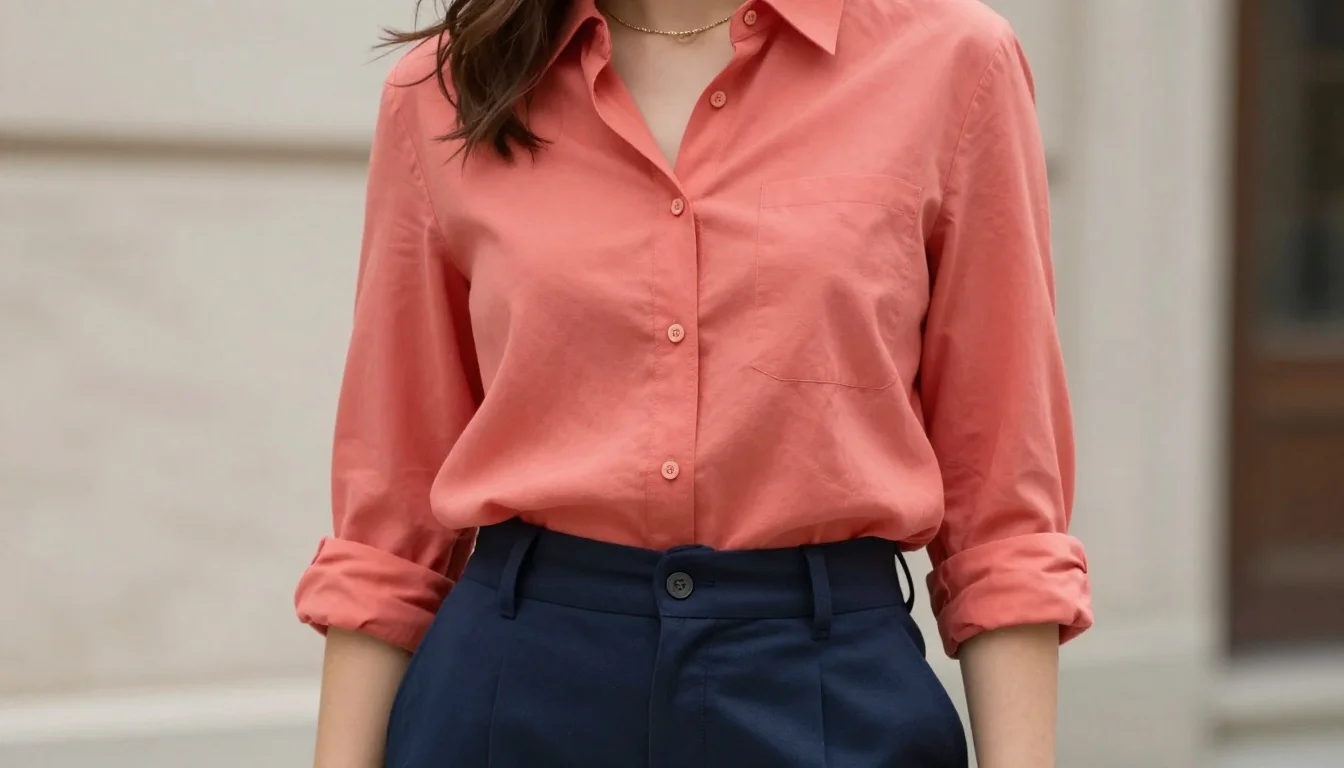
Coral reaches maximum impact when paired with clean contrasting colors. Navy and coral is the most polished combination — both colors elevate each other. White and coral creates a fresh, summer-ready look. Denim blue grounds coral's warmth for casual wear. Warm grey provides a sophisticated neutral backdrop that lets coral take center stage without competing.
Ready to Find Your Best Colors?
Get Your Color AnalysisHow to Style Coral for Maximum Impact
Coral + Navy: The Perfect Pair
Navy and coral is one of the most universally flattering color combinations. A coral blouse with navy trousers for work. A coral sundress with a navy blazer. A coral scarf with a navy coat. The deep cool blue of navy provides the perfect counterbalance to coral's warm brightness, and the combination looks sophisticated in every setting from boardroom to beach.
Coral as an Accent
If full coral near the face is too much for your coloring, use it as an accent. Coral earrings, a coral belt, coral shoes, or a coral bag add warmth and energy to a neutral outfit without overwhelming your skin. This is the best coral strategy for cool undertones — keep the coral away from the face and let it add visual interest from a distance.
Coral in Summer
Coral is summer's most natural color. A coral linen shirt with white shorts. A coral sundress with tan sandals. A coral bikini against sun-kissed skin. Summer sunlight enhances coral's warm glow and makes it look especially vibrant. In winter, coral can feel jarring against grey skies — save your brightest corals for warm-weather months.
Choosing Your Coral Intensity
Match coral's saturation to your contrast level. High contrast coloring — dark hair, light skin — can carry vivid, saturated coral. Medium contrast works best with medium coral. Low contrast or soft coloring needs muted, dusty, or peachy coral. A soft-spoken person in neon coral looks like the color is wearing them. Match the volume to your features.
Coral Combinations That Clash
Orange-heavy coral on cool undertones
A coral with strong orange undertones against cool, pink-toned skin creates a jarring temperature clash. The orange warmth has nothing to harmonize with, making the coral look garish and your skin look oddly pink or grey by contrast. Shift toward pink-coral or rose-coral instead.
Coral with neon intensity on soft coloring
A vivid, neon-leaning coral overwhelms soft, muted coloring — Soft Summers and Soft Autumns especially. The color's intensity dominates the face, making features look flat and washed out by comparison. Choose a muted, dusty, or softened coral that matches your natural saturation level.
Coral paired with red or fuchsia
Coral near red or fuchsia creates a visual clash where both colors compete for attention without harmonizing. The orange in coral fights the blue in fuchsia. The warmth in coral muddies when placed next to true red. Keep coral with neutrals, blues, or greens for clean combinations.
Head-to-toe coral
An entirely coral outfit from head to toe creates an overwhelming monochrome wash of warm color. Coral is a statement color that needs a neutral backdrop to balance it. One coral piece is a style move. Four coral pieces is a costume. Keep coral to one or two elements per outfit.
Stop Guessing, Start Wearing Your Colors
Discover Your PaletteCoral Swaps That Actually Flatter
Find the coral shade and combination that works for your coloring.
Orange-heavy coral clashes with cool undertones. Pink-shifted coral has the same warm energy with a base that harmonizes with cool skin.
Neon coral overwhelms soft features. Dusty coral carries the same warmth at a volume your coloring can support without being overpowered.
Coral and red compete rather than complement. Navy, white, and denim let coral be the star without creating color tension.
Moving coral away from the face eliminates undertone conflict while still adding the color energy to your outfit.
Coral lipstick sits directly on skin, making undertone match critical. Pink-coral flatters cool undertones while still reading as coral rather than straight pink.
Coral in winter can feel jarring without context. Layering it under a rich neutral coat grounds the warmth and makes it seasonally appropriate.
Your Best Coral by Season
Each season has its own coral sweet spot — the shade where warmth, saturation, and depth align with your natural coloring:
Warm Spring
Learn moreYour coral is bright, clear, and warm — true coral, light tangerine coral, and vivid peach. These warm, light, high-saturation corals match your naturally bright, warm coloring perfectly. Coral is arguably the most flattering single color for Warm Spring.
Soft Autumn
Learn moreYour coral is muted, warm, and earthy — dusty coral, terracotta-coral, and soft salmon. These toned-down corals have enough warmth to harmonize but enough mutedness to match your gentle, earthy coloring. Avoid bright or neon corals that overwhelm your softness.
Light Summer
Learn moreTraditional coral is usually too warm for Light Summer, but pink coral and rose coral work beautifully. These cool-shifted corals carry summer energy while matching your cool, soft coloring. Think of them as the bridge between coral and pink — warm enough to feel summery, cool enough to flatter.
Find Your Perfect Coral
Coral is not one color — it is a family of shades ranging from pink to orange, muted to vivid, pale to deep. The coral that makes one person glow can make another look sallow. A personalized color analysis identifies exactly where on the coral spectrum your most flattering shade lives, so you stop buying corals that end up in the returns pile and start wearing the one that truly lights up your face.
Get Your Color AnalysisFrequently Asked Questions About So It Flatters, Not Clashes
Can cool undertones wear coral?
Yes, but choose coral that leans toward pink rather than orange. Pink coral, rose coral, and cool watermelon have enough coral warmth to read as interesting but enough pink to harmonize with cool skin. Avoid orange-heavy corals, which will clash with cool undertones and create a sallow or garish effect.
What colors go best with coral?
Navy is the single best coral companion — the combination is polished and universally flattering. White and coral is fresh and summery. Denim blue grounds coral for casual wear. Warm grey provides sophistication. Gold accessories complement coral warmth. Avoid pairing coral with red, fuchsia, or bright orange.
Is coral warm or cool?
Coral is predominantly warm — it contains orange and red, both warm colors. However, coral exists on a spectrum. Orange-coral is strongly warm. Pink-coral is warm-neutral. Rose-coral leans slightly cool. The coral that flatters you depends on where on this spectrum your undertone finds harmony.
What skin tone does coral look best on?
Coral looks most naturally harmonious on warm undertones — golden, peachy, or olive skin. It also flatters medium-to-deep skin tones beautifully because the contrast between coral and darker skin creates a vibrant, energizing effect. Fair cool-toned skin needs pink-coral rather than orange-coral to avoid clashing.
Why does coral make me look orange?
You are probably wearing a coral that leans too heavily toward orange for your undertone. If you have cool or neutral skin, orange-based coral reflects warm light that clashes with your skin and creates a sallow or orangey cast. Switch to a coral with more pink in it — the warmth will feel fresh rather than garish.